How to build a Dakota fire hole
A Dakota fire hole is a small outdoor wood fire built below ground. A second, higher opening feeds fresh air through a short underground tunnel to the fire beneath your pot.
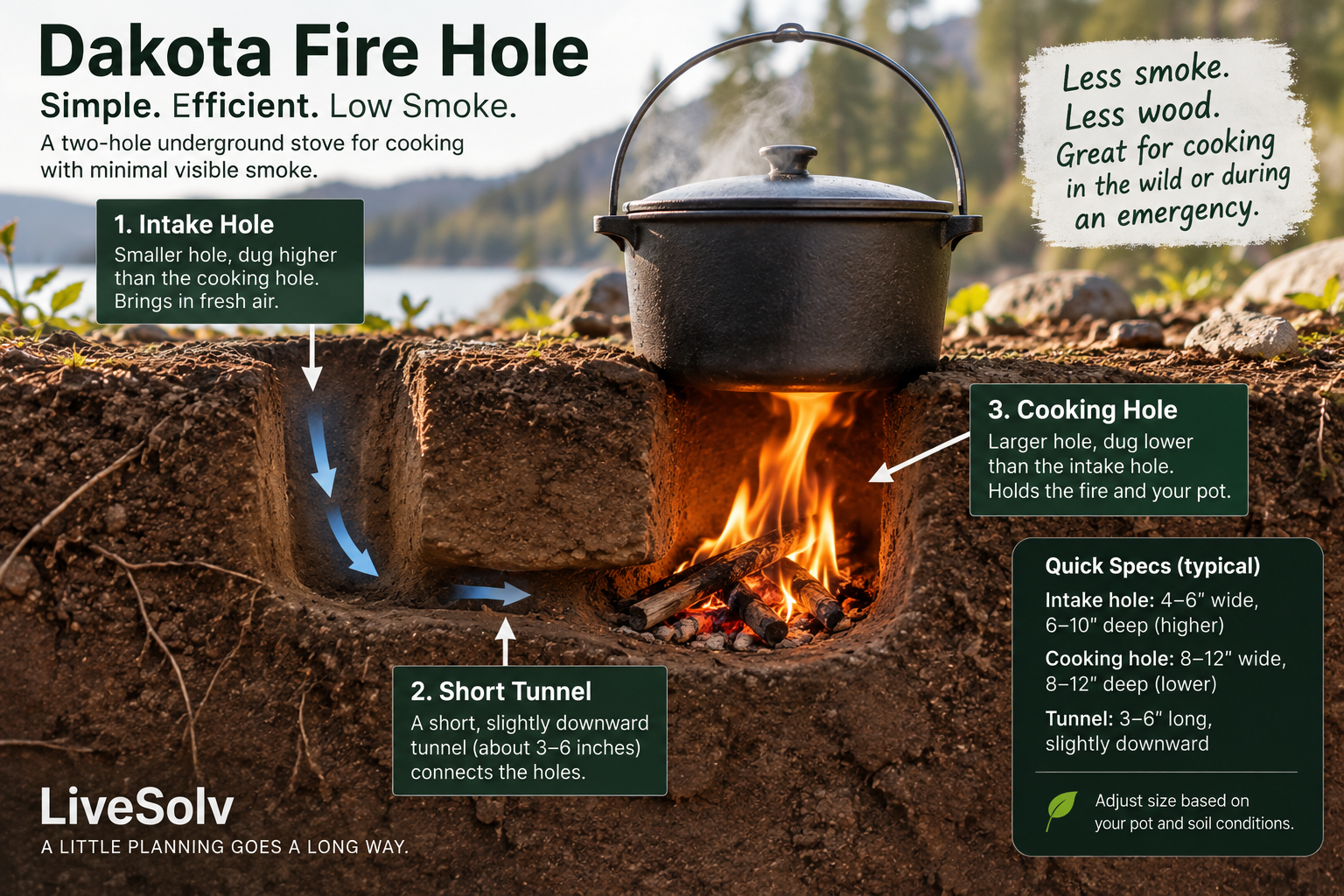
Build it in six steps
Use firm mineral soil that will hold its shape. Do not dig into peat, duff, roots or other organic soil that can smolder underground. Avoid loose sand. Check local burn restrictions before lighting anything.
Make the main opening large enough for a small cooking fire beneath your pot. Save the soil so you can completely refill the hole afterward.
Dig a smaller opening on the side the breeze is coming from. Its bottom should connect toward the lower portion of the cooking hole.
The holes only need enough separation to leave stable soil between them. A short passage of roughly a few inches can work when the soil is firm. Keep the tunnel large enough for air to move freely and make sure it will not collapse.
Start with dry tinder and small sticks beneath the pot. As the fire heats up, rising hot air helps pull fresh air through the intake and tunnel.
Support the pot securely above the main opening and leave enough space around it for hot gases to escape. Do not completely seal the opening with the cookware.
Why use this instead of a normal campfire?
It concentrates heat beneath the cookware. You are cooking over the fire instead of heating a large open area.
It can use small fuel. Dry sticks and smaller pieces of wood can provide useful cooking heat.
The below-ground fire is more sheltered from wind.
It is a fallback, not the first choice. A safe outdoor propane/butane stove or purpose-built rocket stove is easier when you have one and have fuel. This is useful knowledge when ordinary cooking options are gone.
When you are finished
Extinguish the fire completely. Stir the remains and make sure there is no residual heat or smoldering material. Only after it is fully cold should you refill both openings with the saved soil and restore the site. Never bury a live fire.